Key Takeaways
- Starting a veterinary practice needs strong foundations that include having a clear strategy, solid financial planning, regulatory compliance and a well‑defined service model.
- Vet start‑ups are capital‑intensive and take time to grow, with typical costs of \$550,000–\$ 1 million and a 12–24‑month ramp‑up period before reaching break‑even.
- Choosing the right practice type and location is critical, as this sets your investment needs, workflow design, staffing requirements and client‑acquisition strategy.
- Success depends on having efficient systems and proactive marketing, including modern technology, clinical governance, inventory management and strong community engagement to build a client base from scratch.
Starting a vet practice is a significant milestone that lets you blend your clinical expertise with thoughtful business planning. No matter if you’re launching a small‑animal clinic, an emergency service or a mobile veterinary practice, your success will depend on having a clear strategy, strong financial foundations and a solid understanding of regulatory requirements.
Here’s an outline of the essential steps, considerations and common challenges to help you build a practice that’s sustainable and designed for future growth.
Importance of starting up a veterinary practice the right way
A veterinary start‑up practice is a clinic that’s built from the ground up. It’s essentially a new business with no existing client base, systems, or practice operations. Unlike buying an established clinic, a start‑up means that everything must be set up from scratch, including the business model, the facilities, workflows, team culture, pricing, technology, brand identity and many other key factors.
There are pros and cons with starting a veterinary practice. While it can give you full control and independence, it also has higher early‑stage risk because revenue takes time to build.
Why it’s important to set up a veterinary practice from the start
Starting a veterinary practice is a big financial and professional commitment, and the decisions made early on strongly influence the business’s long‑term viability. In Australia and New Zealand, small business survival data highlights why getting the foundations right is essential.
- High early‑stage failure rates: Australian Bureau of Statistics exit rates show that around 20% of new small businesses fail within their first year, and more than 60% fail within their first three years.
- Capital‑intensive sector: Veterinary practices require significant upfront investment. In Australia or New Zealand, estimates range from \$550,000 to over \$1 million, depending on size, location, services offered, software and equipment.
- Longer ramp‑up period: New clinics can take 12 to 24 months to reach break‑even, which makes early financial planning, pricing strategy, and workflow efficiency critical.
- Operational complexity: Practices must comply with veterinary registration requirements, controlled‑drug regulations, radiation safety standards, workplace health and safety, and clinical governance expectations. Poor early compliance can lead to costly remediation or regulatory penalties.
- Client acquisition challenges: With no existing client base, start‑ups must invest substantially in marketing, community engagement and service differentiation to build their momentum.
Buying an existing clinic vs starting from scratch
This table summarises the main differences between buying an established practice versus launching a new one.
| Factor |
Buying an existing clinic |
Starting from scratch |
| Upfront cost |
Around \$200,000–\$1.5M+, mainly driven by goodwill and business value. |
Around \$350,000–\$900,000 – mostly tangible assets and fit‑out. |
| Revenue timeline |
Immediate cash flow; profitability from day one. |
No initial revenue; break‑even usually 12–24 months. |
| Client base |
Existing, often loyal clients; easier early cash flow. |
Must build client base from scratch; needs marketing and community engagement. |
| Team & systems |
Staff, workflows, and PIMS already in place. |
Must recruit staff and design all systems; full control but higher workload. |
| Facility condition |
May inherit outdated layouts, deferred maintenance, or cultural issues. |
Modern facility designed for current workflows and technology. |
| Risk profile |
Lower operational risk due to known financials and established demand. |
Higher early‑stage risk due to unknown demand and slower revenue ramp‑up. |
| Control & flexibility |
Limited by legacy systems and client expectations. |
Full autonomy over technology, medical standards, pricing and culture. |
Sources: Covetrus; Animal Health News
Types of veterinary practices to consider starting
Starting a veterinary practice is an exciting milestone for many veterinary professionals, but it’s also a complex operation that needs clear planning and well-informed decision‑making. The type of practice you choose will shape your service model, investment needs and long‑term growth potential.
Understanding the main practice options will help you align your vision with market demand, operational realities and your own professional strengths. This will give you a strong foundation before you move into more detailed steps for starting up a veterinary practice.
General companion‑animal practice
A standard small‑animal clinic offers consultations, diagnostics, surgery, dentistry and preventive care. This is the most common practice type, and it suits suburban or regional areas with steady pet ownership. It needs moderate capital investment and a broad clinical skill set, which makes it a practical entry point for many new owners.
Emergency and critical‑care practice
A 24/7 or after‑hours clinic focuses on urgent and life‑threatening cases. These practices need advanced equipment, highly trained staff and robust triage systems. While they’re capital‑intensive, they fill a crucial gap in many regions, and they can generate strong demand due to limited competition.
Specialty referral practice
This type of clinic offers advanced services like surgery, dermatology, cardiology, oncology, or internal medicine. These practices rely on specialist‑qualified veterinarians and sophisticated diagnostic tools. They typically operate on a referral basis and serve a wider geographic catchment with higher‑value procedures.
Mobile veterinary practice
This usually comprises a fully equipped vehicle that offers in‑home consultations, vaccinations, minor procedures and end‑of‑life care. Mobile practices have lower overheads and offer convenience for clients with mobility challenges, anxious pets, or busy schedules. They can also complement brick‑and‑mortar practices as an outreach service.
Mixed‑animal or production‑animal practice
These practices are common in rural areas and serve companion animals and livestock or exclusively farm animals. Veterinary staff need knowledge of herd health, biosecurity and on‑farm operations. They often involve significant travel and strong relationships with farming communities.
Exotic or boutique practice
These clinics are focused on birds, reptiles, pocket pets, or high‑touch wellness services, cater to niche markets and need specialised knowledge and equipment. While they’re smaller in size, they can differentiate strongly in urban areas with diverse pet populations.
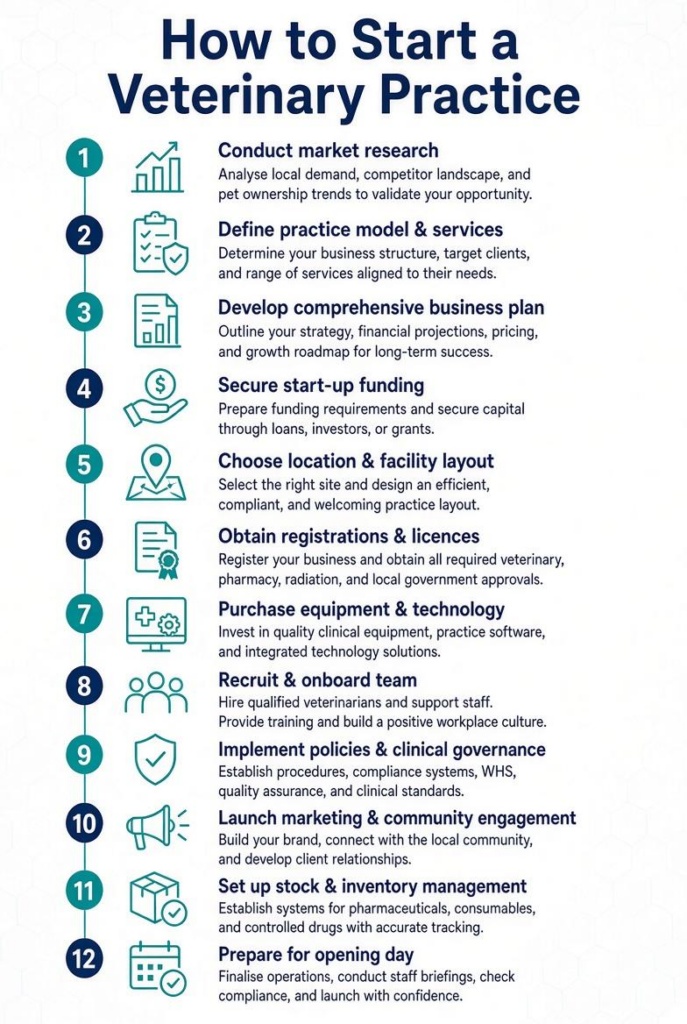
How to start a veterinary practice: Step-by-step process
Starting a veterinary practice in Australia or New Zealand follows a similar pathway, which is shaped by common regulatory expectations, business standards and professional requirements. The steps below describe a high-level and practical process that outlines what’s needed from early planning through to opening day.
1. Conduct market research
It’s essential to understand the local demand for veterinary services before you commit to a location or service model. Assess pet ownership trends, competitor clinics, gaps in service (for example, emergency care or mobile services), demographic growth and average household income. In Australia and New Zealand, councils often publish regional population and animal‑registration data that can help validate demand.
2. Define your practice model and services
Clarify the type of practice you intend to build – general practice, emergency, mobile, mixed‑animal, or specialty. Your service mix will influence what staff you need, equipment costs, facility size and pricing strategy. Align this with your clinical strengths and the needs you identified in your market research.
3. Develop a comprehensive business plan
A strong business plan is essential for securing finance and guiding early decision‑making. It should include your mission, service model, market analysis, pricing strategy, staffing plan, technology requirements, marketing approach and financial projections. Banks and veterinary‑industry lenders in both countries usually require detailed cash‑flow forecasts and capital‑expenditure plans.
4. Secure start‑up funding
Veterinary practices are capital‑intensive, with typical start‑up costs ranging from \$550,000–\$ 1 million for a small‑animal clinic. Funding options include commercial loans, equipment finance, private investment or personal capital. In Australia, lenders may require ASIC registration and financial history; in New Zealand, similar requirements apply through the Companies Office. Both countries offer equipment‑finance products aimed at medical and veterinary businesses.
5. Choose a location and facility layout
Choose a site with appropriate zoning, parking, visibility and accessibility. Council approval is needed for clinical premises, including compliance with noise, waste‑management and signage rules. The design of your facility should support efficient workflows, with separate treatment areas, isolation zones, surgery, imaging and client‑facing spaces. It should also meet veterinary‑specific building standards.
6. Obtain required registrations and licences
Across Australia and NZ, veterinarians must hold current professional registration with their state or regional veterinary board. Additional compliance may include:
- Radiation‑use licences for X‑ray equipment
- Controlled‑drug storage and handling approvals
- Workplace health and safety compliance
- Council permits for clinical waste disposal. These requirements vary slightly by jurisdiction but follow similar principles.
7. Purchase equipment and technology
Select diagnostic tools, surgical equipment, laboratory devices and consumables based on your service model. Technology infrastructure is just as important – you’ll need leading practice‑management software, digital imaging, payment systems, inventory management and client‑communication tools. Many practices in Australia and New Zealand choose cloud‑based veterinary software to streamline their operations and reduce their IT overhead.
8. Recruit and onboard your team
Build a team that reflects your practice’s clinical scope and culture. This will likely include veterinarians, vet nurses, receptionists, a practice manager and support staff. Make sure that all team members meet your local qualification and registration requirements. Investing early in training, workflow design and communication systems will help lift practice performance, reduce burnout and improve your client experience.
9. Implement policies, procedures and clinical governance
Create clear protocols for patient care, triage, infection control, anaesthesia, record‑keeping and client communication. Australia and New Zealand emphasise clinical governance, including incident reporting, quality assurance and ongoing professional development. Robust systems will support staff and patient safety, consistency and regulatory compliance.
10. Launch your marketing and community‑engagement plan
Build your visibility before opening day by designing and launching your veterinary marketing strategy. This will likely include digital marketing, social media, local partnerships and community events. Many successful start‑ups run pre‑launch campaigns that offer on-site tours, meet‑the‑team sessions, or early‑bird appointment bookings. Strong community engagement will help to accelerate your client acquisition in the first 6-12 months.
11. Set up stock and inventory management
Effective inventory control is critical for cash‑flow stability and clinical readiness. Set up systems for ordering, tracking and rotating pharmaceuticals, consumables, food and retail items. In Australia and New Zealand, practices must meet controlled‑drug storage rules and keep accurate records for audits. Strong inventory processes will reduce waste, prevent stockouts and support safe and compliant veterinary operations.
12. Prepare for opening day
Finalise your stock, test equipment, rehearse workflows and make sure all compliance documentation is complete. Soft launches – opening quietly for a few days – will let your team refine processes before full operations begin.
Find out more about veterinary startup software
Benefits of setting up your own veterinary practice
Starting your own veterinary practice is a major professional milestone that can offer independence and long‑term rewards.
Beyond potential financial opportunity, though, ownership gives you the freedom to shape how you and your team deliver veterinary care.
Professional autonomy
Owning a practice lets you set your own clinical standards, choose your preferred technology and design workflows that reflect your values and approach to veterinary practice. You can decide which services to offer, how appointments run and how you balance patient care with business sustainability.
Financial growth and stability
While start‑up costs can be high, the long‑term financial benefits can be rewarding. Practice ownership lets you build equity, diversify your income streams and control pricing and cost management. Over time, a well‑run clinic becomes a valuable asset that can be sold, expanded, or passed on.
Leadership and team culture
Operating your own practice lets you create a positive and supportive workplace. You can establish a team culture that prioritises collaboration, wellbeing and professional development, which helps attract and retain skilled staff in a competitive market.
Independent practices often become trusted pillars of their local communities. Building relationships with pet owners, rescue groups and local businesses can strengthen your reputation and build loyalty. This connection can be personally fulfilling and commercially beneficial.
Innovation and flexibility
Without corporate constraints, you can innovate freely and adopt new technologies, trial service models, or expand into veterinary telehealth or mobile care. Ownership lets you respond quickly to market changes and client needs.
Personal fulfilment
For many veterinarians, owning a practice represents the culmination of years of clinical experience and professional growth. It offers a sense of achievement and purpose and the ability to leave a lasting impact on animal health and community wellbeing.
8 important considerations when setting up a veterinary practice
Launching a veterinary practice involves far more than clinical expertise – it’s a strategic business venture that needs careful planning, compliance and foresight.
These considerations can help make sure your veterinary start‑up is sustainable, compliant and positioned for long‑term success.
1. Regulatory and professional compliance
Veterinary practices in Australia and New Zealand must meet strict professional standards. This includes registration with the relevant veterinary board, radiation and controlled‑drug licences and adherence to workplace health and safety legislation. Early engagement with local councils and regulators can help avoid expensive delays.
2. Financial planning and cash‑flow management
Start‑up costs are substantial, and cash‑flow pressure is common in the first year of any veterinary practice start-up. Use conservative veterinary practice metrics and KPIs, include contingency funding and plan for delayed revenue while your client numbers grow. To improve end-of-year financial reporting, set SMART goals and get advice from a financial professional with experience in healthcare or veterinary businesses.
3. Facility design and workflow efficiency
Your clinic layout should support smooth patient flows, infection control and staff safety. Consider zoning your premises for treatment, surgery, imaging and client areas. An efficient design will reduce stress, improve productivity and lift the overall client experience.
4. Technology and data security
Modern veterinary practices rely heavily on digital systems, including practice‑management software and imaging and payment platforms. Choose secure, cloud‑based solutions that meet privacy laws and integrate seamlessly across your operation.
5. Staffing and leadership
Recruiting the right team is critical. Define clear roles, provide structured onboarding and invest in your team’s professional development. Strong leadership and communication will help build a positive culture and reduce staff turnover.
6. Marketing and reputation management
A well‑planned marketing strategy will help build visibility and trust. Combine digital channels with community engagement and use consistent branding. Reputation management – including online reviews and client feedback – is important for sustained growth.
7. Risk management and insurance
Protect your business with comprehensive insurance, including professional indemnity, public liability, property, and cyber cover. Establish protocols for incident reporting and emergency response to safeguard your staff, patients and clients.
8. Sustainability and future growth
Plan for scalability from the beginning. Consider energy‑efficient design, waste‑reduction strategies and flexible spaces that let you expand in the future. Sustainable practices reduce cost and align with growing client expectations around environmental responsibility.
Navigating the veterinary practice start-up journey
Common challenges and mistakes to avoid when setting up your vet practice
Starting a veterinary practice comes with predictable hurdles. Focusing on the most common ones can help you avoid costly setbacks and build a stronger foundation from opening day onwards. Here are the top five challenges to watch for.
1. Underestimating start‑up and operating costs
Many new owners misjudge how much capital is needed beyond the initial fit‑out. Ongoing expenses, like staffing, consumables, marketing and loan repayments can place pressure on early cash flow if they’re not conservatively planned for.
2. Choosing a location without proper market research
A site that seems convenient or affordable may not have the demographics, visibility or parking needed to support future growth. Weak market analysis can lead to slow client acquisition and higher marketing spend.
3. Inefficient workflow and facility design
Poorly planned layouts create bottlenecks, increase staff, patient and client stress and reduce productivity. Common issues include cramped treatment areas, inadequate isolation spaces and poor separation between client and clinical zones.
4. Incomplete regulatory compliance
Missing or delayed licences – such as radiation approvals, controlled‑drug requirements or council permits – can stop your operations or trigger penalties. Early engagement with your industry regulators is essential to avoid potentially expensive delays.
5. Insufficient marketing and community engagement
Some owners assume clients will arrive organically once their clinic opens. Without a clear marketing strategy and strong local engagement, early growth can be slow and unpredictable.
Start your veterinary practice the right way with Covetrus Ascend
Building a successful veterinary practice takes more than clinical expertise – it also needs the right tools, systems and support from day one. Covetrus Ascend gives new practice owners a modern, cloud‑based platform that streamlines workflows, strengthens client communication and simplifies inventory, billing and reporting.
Ascend has intuitive technology designed specifically for veterinary teams that helps reduce administrative pressure, improve efficiency and lets you and your team focus on delivering exceptional patient care.
To learn more, watch Covetrus Ascend’s latest recorded demo, or book an in-person demo today.
FAQs
1. How much does it cost to start a veterinary practice?
Most small‑animal startups in Australia and New Zealand need between \$550,000–\$ 1 million, depending on location, size, equipment and fit‑out. Costs include facility design, technology, staffing, inventory and regulatory approvals. A detailed business plan and cash‑flow forecast will help you work out your exact funding needs.
2. How long does it take to open a new clinic?
The full process typically takes 6–12 months. Key timeframes include securing finance, obtaining council and regulatory approvals, completing the fit‑out, installing equipment, hiring staff and running pre‑launch marketing. Delays often occur around building consent, licensing and supply‑chain timelines.
3. What licences and registrations do I need?
You’ll need current veterinary board registration, radiation‑use approval for X‑ray equipment, controlled‑drug storage compliance, workplace health and safety documentation and council permits for waste disposal. Requirements vary slightly by country, state or region, but the core obligations are similar across Australia and New Zealand.