Key Takeaways
- Strong veterinary client engagement improves compliance, strengthens loyalty and leads to better patient outcomes.
- A practical engagement plan can help your team communicate consistently and reduce unnecessary admin pressure.
- Digital tools like Covetrus Ascend make client engagement easier by centralising reminders, messages and patient information.
- Measuring engagement through attendance, reminders, follow‑ups and feedback helps you track progress and refine your strategy.
What Is Veterinary Client Engagement?
Veterinary client engagement is the way a veterinary practice stays connected with pet owners in their clinic. It’s about clear communication, checking in at the right times, helping clients understand their pet’s needs and making it easy for them to follow through with care recommendations. When clients are informed and supported, they’re more likely to trust your advice, return to your practice and stay on top of their pet’s health.
Benefits of Veterinary Client Engagement
A strong client engagement strategy will help your practice run more smoothly, strengthen your team’s relationships with pet owners and support better clinical outcomes. When clients feel informed and connected, your team can deliver care more effectively and with less stress.
1. Better compliance and follow‑through: When clients clearly understand their pet’s needs and feel supported between visits, they’re more likely to follow treatment plans, book rechecks and stay on top of preventive care. This leads to healthier patients and fewer avoidable complications.
2. Stronger client loyalty and retention: Consistent communication builds trust. When pet owners feel heard, informed and valued, they’re more likely to return to your practice, recommend you to others and choose your team for long‑term care.
3. More efficient workflows for your team: Good engagement reduces unnecessary phone calls, missed appointments and last‑minute questions. Digital tools, reminders and clear communication can free up your team’s time, reduce stress and help your practice run more smoothly.
4. Improved patient outcomes: Engaged clients make better decisions because they understand what’s happening and why. This leads to earlier intervention, better monitoring at home and more accurate follow‑up – all of which support stronger clinical results.
5. Better revenue and financial performance: Strong client engagement leads to more consistent appointment bookings, higher acceptance of recommended treatments and better adherence to preventive care. When clients understand the value of your guidance, they’re more willing to invest in timely care, which will support steadier and more predictable practice revenue.
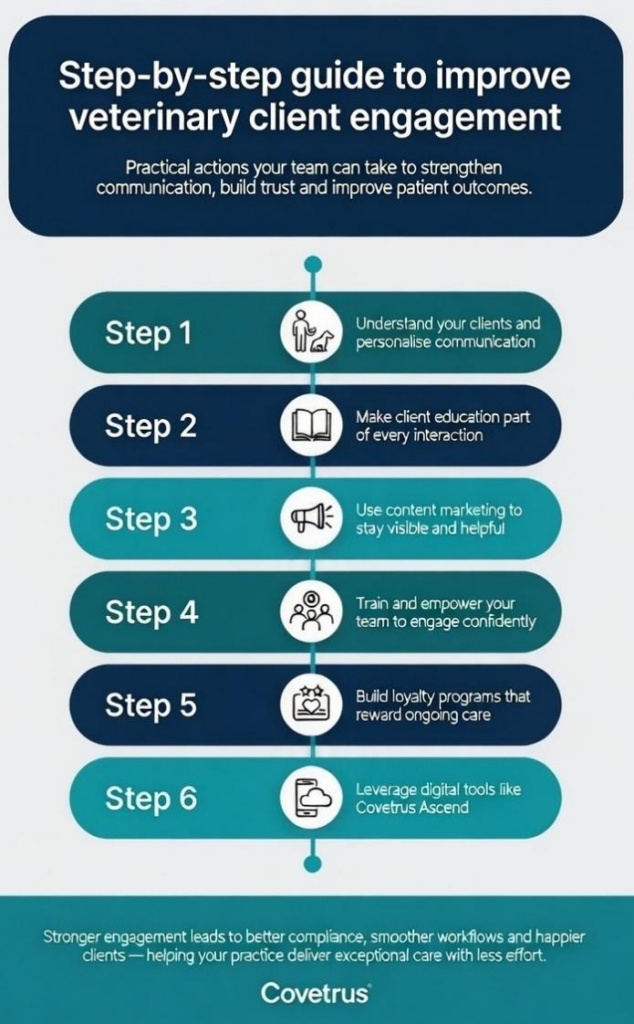
Step-by-Step Guide to Improve Veterinary Client Engagement
A clear and practical client engagement plan will help you and your team communicate consistently, build trust with pet owners and support better care, without adding unnecessary complexity to your day. Here’s a step-by-step engagement plan outline:
1. Understand your clients and personalise communication
Start by using your practice data to segment your clients by pet type, life stage and health needs. Then tailor your messages like reminders, follow‑ups and check‑ins, so each client gets relevant and timely communication that feels personal rather than generic.
“Being able to send SMS messages was a huge drawcard. So was being able to integrate with our major supplier Provet. It meant our staff didn’t need to spend unnecessary time updating prices and they could focus on other, more important, tasks. Plus, it reduced the risk of items being missed.” – Dr Danielle Appay, Veterinarian, Indooroopilly Vet Clinic.
2. Make client education part of every interaction
Use simple, jargon‑free explanations during consults and follow up with written or digital resources. Share vet‑approved articles, videos and FAQs so your clients can revisit the information at home. This will help them understand diagnoses, treatment plans and preventive care.
3. Use content marketing to stay visible and helpful
Post regularly on social media and your website and send email newsletters with practical tips, seasonal health advice and behind‑the‑scenes updates. Focus on short, useful content that answers clients’ common questions and keeps your practice top‑of‑mind between visits.
4. Train and empower your team to engage confidently
Make client engagement a shared responsibility. Offer your team training on communication skills, handling difficult conversations and using your software tools. When front office, vet nurses and veterinarians deliver consistent messages, your clients will experience a smoother, more reassuring journey. Plus, training can improve your veterinary practice performance.
5. Build loyalty programs that reward ongoing care
Create simple, transparent loyalty or wellness plans that encourage regular visits and preventive care. Offer benefits such as bundled services, discounts or member‑only reminders, so clients see clear value in staying committed to your practice.
6. Leverage digital practice management solutions
Use cloud-based, integrated platforms like Covetrus Ascend to automate reminders, share educational content with clients and manage communication across all your channels. Centralising these tasks in your PMS will reduce your team’s admin burden, keep messaging consistent, and make it easier for clients to stay engaged with your practice.

Common Challenges in Veterinary Client Engagement
Even with the best intentions, most veterinary practices face some common challenges that make it hard to maintain good client engagement. Understanding these will help you work out solutions to support your team and improve the client experience in your practice.
1. Limited staff time: Busy days, unexpected emergencies and high caseloads can mean your team often has little time for follow‑ups, personalised communication or proactive check‑ins. Engagement tasks can slip through the cracks when everyone is stretched thin.
2. Communication gaps: Clients may miss messages, misunderstand instructions or forget important details after a consult. Without consistent, clear communication across channels, it’s easy for information to become disjointed or overlooked.
3. Client education barriers: Pet owners vary widely in their experience, confidence and ability to understand medical information. Complex explanations, rushed consults or limited access to reliable resources can make it harder for clients to follow through with care.
4. Inconsistent team messaging: When different staff members give slightly different advice or use different communication styles, clients can feel confused or unsure. Consistency is key to building trust and helping clients feel supported.
5. Lack of digital tools or outdated systems: Without modern, cloud-based practice management software – such as Covetrus Ascend – practices often rely on manual reminders, paper notes or disconnected systems. This increases admin workload and makes it harder to deliver timely, coordinated communication.
Modern client engagement tools make it easier for you and your team to communicate clearly, reduce their admin workload and give pet owners a smoother, more connected experience. Here are some useful tools and technologies to consider:
1. Veterinary practice management software
Pros: Leading PMS like Covetrus Ascend centralises appointments, reminders, medical records and communication in one place. It automates routine tasks, reduces manual admin and keeps messaging consistent across the team.
Cons: Needs onboarding and training. Older hardware or slow internet can affect performance.
Best use cases: Busy practices that need streamlined workflows, automated reminders, integrated client communication and a single source of truth for patient information.
Pros: Help segment clients, personalise messaging and track communication history. Useful for targeted reminders, follow‑ups and marketing campaigns.
Cons: Can become complex if they’re not well‑maintained. They may duplicate features already in your PMS.
Best use cases: Practices that want personalised communication, behaviour‑based messaging or structured follow‑up systems for chronic care, preventive care or post‑surgery monitoring.
3. Mobile apps and client portals
Pros: Gives clients easy access to records, prescriptions, appointment booking and educational resources. Improves transparency and reduces phone calls.
Cons: Adoption varies. Some clients prefer traditional communication, or they may struggle with technology.
Best use cases: Practices aiming to reduce their front‑desk workload, improve client self‑service options and provide 24/7 access to essential information.
Pros: Streamline check‑ins, reduce waiting‑room time and support remote consults for follow‑ups or minor concerns. Improve convenience for clients with mobility or transport challenges.
Cons: Not suitable for all clinical issues – they need clear protocols and good internet connectivity.
Best use cases: Post‑operative rechecks, chronic‑care monitoring, triage, behaviour consults and reducing in‑clinic congestion.
5. Social media management and content‑marketing tools
Pros: Easy to schedule posts, share educational content and stay visible between visits. Helps build trust and community around your practice.
Cons: Requires consistent effort, as poorly managed accounts can look inactive or outdated.
Best use cases: Practices that want to strengthen their brand presence, share seasonal health advice, highlight team culture and keep clients engaged outside appointments.
Measuring Veterinary Client Engagement
Tracking client engagement will help you understand what’s working, where you might have gaps, and how your practice can improve client communication and patient care. A simple, step‑by‑step approach makes it easier to measure progress without adding extra pressure on your team.
1. Identify the engagement behaviours you want to measure: Start by choosing the specific actions that show clients are engaged. These might include appointment attendance, preventive‑care compliance, follow‑up responses, portal or app usage and engagement with educational content.
2. Review data from your practice management software: Use your practice management software to track the reminders you’ve sent, reminders completed, booking patterns, missed appointments and repeat visits. This will give you a clear picture of client behaviour over time.
3. Monitor communication performance: Check how often your clients open their emails, respond to texts, confirm appointments or use self‑service tools. Low engagement may signal unclear messaging, poor timing or channels that don’t suit your clients.
4. Assess client understanding and satisfaction: Use short surveys, post‑visit check‑ins or feedback forms to check if your clients feel informed, supported and confident. Look for patterns in questions, complaints or confusion that point to education gaps.
5. Track clinical outcomes linked to engagement: Measure your KPIs – specifically for improvements in preventive‑care uptake, chronic‑care monitoring, recheck attendance and early intervention. Strong engagement often leads to better patient outcomes and fewer avoidable complications.
6. Compare results over time and adjust your strategy: Review your data monthly or quarterly. Identify trends, celebrate improvements and refine your communication, education or use of digital tools, based on what the numbers show.
Improve Your Vet Management Practice with Covetrus Ascend
Covetrus Ascend can help make your practice’s day‑to‑day client communication simpler and more consistent. It brings appointments, reminders, messages and patient information into one place, so you and your team spend less time doing admin and more time supporting clients. With clearer communication, it becomes easier for your pet owners to stay informed, follow the care plans you recommend and feel connected to your practice.
To find out more, watch Covetrus Ascend’s latest recorded demo, or book an in-person demo today.
FAQs
What is veterinary client engagement?
Veterinary client engagement is how well a practice communicates with, educates and supports pet owners throughout their pet’s care. Strong engagement helps clients understand what their pet needs and follow through with treatment plans.
How can veterinary practices improve client engagement?
Practices can improve engagement by personalising communication, offering clear client education, using digital tools, training staff and sharing helpful content through social media or newsletters. Practice management software like Covetrus Ascend can help with this.
How do you measure veterinary client engagement?
You can measure engagement by tracking appointment attendance, reminder completion, follow-up responses, preventive-care uptake, client feedback and how often clients use digital tools like portals or apps.