Key Takeaways
- Veterinary loyalty rewards programs help increase client retention, strengthen relationships and encourage preventive care.
- The most effective programs are simple, easy to understand and aligned with your clinic’s workflow and goals.
- Digital tracking and clear communication are key for keeping clients engaged and reducing admin for your team.
- Common pitfalls include overly complex rules, unsustainable rewards and inconsistent staff messaging.
- Practice management software like Covetrus Ascend can support your program using streamlined SMS and email communication, which helps you promote rewards and keep clients informed.
If your veterinary practice struggles with inconsistent repeat visits or clients who only engage when their pets are unwell, you’re not alone. A solution many practices are turning to is veterinary loyalty rewards programs. According to Vet Practice magazine, these can “reinforce client spending habits, celebrate responsible pet ownership, and reduce the chances of clients looking elsewhere for a ‘good deal’.”
They also offer a simple way to encourage preventive care, strengthen long‑term client relationships and build a better client experience.
In this guide, you’ll learn what these programs are, the different types available, the benefits they create and how to set one up step‑by‑step. We’ll also cover the tools that make loyalty programs easy to manage and the common mistakes to avoid.
What Are Veterinary Loyalty Rewards Programs?
Veterinary loyalty rewards programs are structured systems that give clients benefits for returning to your clinic, engaging in preventive care or completing specific actions that support their pet’s health. They work pretty much like the loyalty programs you’ve come across in retail, hospitality, or banking, which offer points, credits, visit‑based rewards or membership perks that make ongoing care feel easier and more valuable.
For veterinary practices, these programs help build stronger long‑term relationships, encourage consistent attendance and create a more predictable workflow. For clients, they offer recognition, savings and a clearer sense of partnership in their pet’s wellbeing.
Types of Veterinary Loyalty Rewards Programs
Loyalty programs come in various formats. Each is designed to encourage repeat visits and strengthen long‑term client relationships. The right model depends on your clinic’s workflow, client base and the behaviours you want to reinforce. Here are some of the most common vet rewards programs found in Australia and New Zealand.
1. Points‑based systems
Clients earn points for every dollar spent, which can be redeemed later for services, products or credits. This model is flexible and easy to understand, which makes it popular across small and multi‑site clinics. Points can be weighted to encourage particular behaviours such as annual vaccinations, parasite prevention purchases or booking ahead. Because rewards accumulate gradually, clients stay engaged over time.
2. Membership or annual plans
Membership programs offer clients a predictable yearly fee in exchange for bundled benefits, like discounted consults, free nail trims, priority bookings or wellness checks. These plans build long‑term commitment and help clinics stabilise revenue throughout the year. They’re especially effective for practices that want to promote preventive care and reduce potential cost barriers for routine services.
3. Tiered membership programs
Tiered programs offer escalating benefits across levels such as Bronze, Silver and Gold. As clients move up tiers, they unlock perks like discounted consults, priority bookings or complimentary services. This structure motivates clients to stay engaged and gives them a sense of progression. It also lets clinics tailor rewards to different spending patterns without over‑discounting core services.
4. Prepaid wellness credits
This model lets clients buy credits upfront that can be used for services like consults, diagnostics or grooming. Credits simplify budgeting for pet care and encourage clients to return to the same clinic to redeem them. For practices, prepaid credits improve cash flow and reduce no‑shows while giving clients a sense of convenience and value.
5. Visit‑based rewards
This is a straightforward option where clients receive a reward after a certain number of visits. This could be a free consult, discounted service or complimentary product. This approach is easy for teams to explain, and it encourages clients to attend consistently, especially if their pets need ongoing care. It’s also a low‑admin model that can work well for clinics without needing integrated loyalty software.
6. Behaviour‑based incentives
These rewards encourage specific actions that support clinic growth and preventive care. Clients can earn incentives for referrals, online reviews, forward booking, or staying compliant with annual vaccinations and parasite prevention. Behaviour‑based rewards help clinics reinforce the habits that lead to healthier pets and stronger client relationships, without relying solely on spend‑based incentives.
Top Benefits of Loyalty Programs for Veterinary Practices
A well‑designed loyalty program does more than just reward repeat visits. It also strengthens relationships with your clients, supports preventive care and creates financial stability for your practice. Here are some of the key benefits of introducing veterinarian rewards.
1. Higher client retention
Loyalty programs give clients a reason to keep returning, especially when rewards feel meaningful and are easy to redeem. When pet owners see ongoing value in staying with your clinic, they’re less likely to shop around. Strong retention also reduces marketing costs, as keeping an existing client is far more efficient than attracting a new one.
2. Increased preventive care compliance
Rewarding behaviours like annual vaccinations, parasite prevention or forward booking helps to reinforce good habits. Clients are more likely to stay on schedule when they know their actions contribute to points or perks. This leads to healthier patients, fewer emergency visits and a more predictable clinical workload throughout the year.
3. Predictable recurring revenue
Membership plans, prepaid credits and tiered programs help smooth out seasonal fluctuations. When clients commit to annual or prepaid options, veterinary practices enjoy a more stable cash flow and clearer forecasting. This financial consistency helps support staffing, inventory planning and long‑term investment in equipment or technology.
4. Improved client satisfaction
Loyalty rewards create a sense of appreciation and personal connection. Clients feel recognised for their commitment, which strengthens their trust in your practice and lifts their overall experience. Even small perks can make interactions feel more positive, which can help your clinic stand out in competitive local markets.
5. Increased lifetime value
By encouraging regular visits and preventive care, loyalty programs naturally extend the length and depth of the client relationship. Over time, this increases each client’s lifetime value through consistent spending, broader service uptake and stronger engagement with your clinic’s offerings.
6. Reduced price sensitivity
When clients receive ongoing rewards or bundled benefits, they’re less focused on individual service costs. Loyalty programs shift attention from price to value, which helps your clients feel confident in their choices and reduces potential hesitation around recommended care. This supports better clinical outcomes, steadier revenue and increased profits.
What To Include in a Successful Veterinary Loyalty Program
A strong loyalty program is built on transparency, meaningful rewards and simple client experiences. The vet rewards components below form the foundation of an effective scheme that can work well for your practice, team and clients.
1. Clear earning rules
Clients should understand exactly how they earn rewards, for example, through spend, visits or specific behaviours. Clear rules will reduce confusion and make sure the program feels fair. Simple structures also make it easier for staff to explain the program consistently during consults and at checkout.
2. Meaningful reward tiers
Reward tiers should offer benefits that genuinely matter to pet owners, such as discounted consults, priority bookings or complimentary services. Tiered systems create a sense of progression and encourage clients to stay engaged. They also allow veterinary practices to tailor perks to different spending patterns without over‑discounting their core services.
3. Limitations and eligibility
Every program needs clear boundaries to stay sustainable. Define which services earn points, which rewards can be redeemed, and any exclusions that apply. Eligibility rules help prevent misunderstandings and make sure the program supports clinical priorities rather than encouraging unnecessary treatment.
4. Expiry rules
Expiry dates keep the program manageable and encourage the timely use of rewards. Whether points expire annually or credits have a set timeframe, transparency is key. Clear expiry rules will also help your clinic avoid liability build‑up from unused rewards.
5. Digital tracking
Digital tools make loyalty programs easier to manage and more accurate. Loyalty platforms can reduce admin time, prevent errors and give clients real‑time visibility of their rewards. Digital systems also support automated reminders and personalised communication if they’re not already included in your practice management software (PIMS).
6. Easy client communication
Clients should be able to access their rewards information quickly, whether through email updates, SMS reminders or a mobile app. Clear communication will keep clients engaged, and it reduces the need for staff to manually explain balances or rules. It also helps promote new offers or seasonal incentives.
7. Staff training and consistency
A loyalty program only works when your team understands and champions it. Training will make sure staff can explain earning rules, promote benefits and handle questions confidently. Consistent messaging across the team helps build trust and improves client uptake.
8. Regular review and optimisation
Successful programs evolve over time. Reviewing redemption patterns, client feedback, and financial impact will help you refine rewards, adjust tiers or simplify your program rules. Regular optimisation will keep the program relevant and aligned with your clinic’s goals.
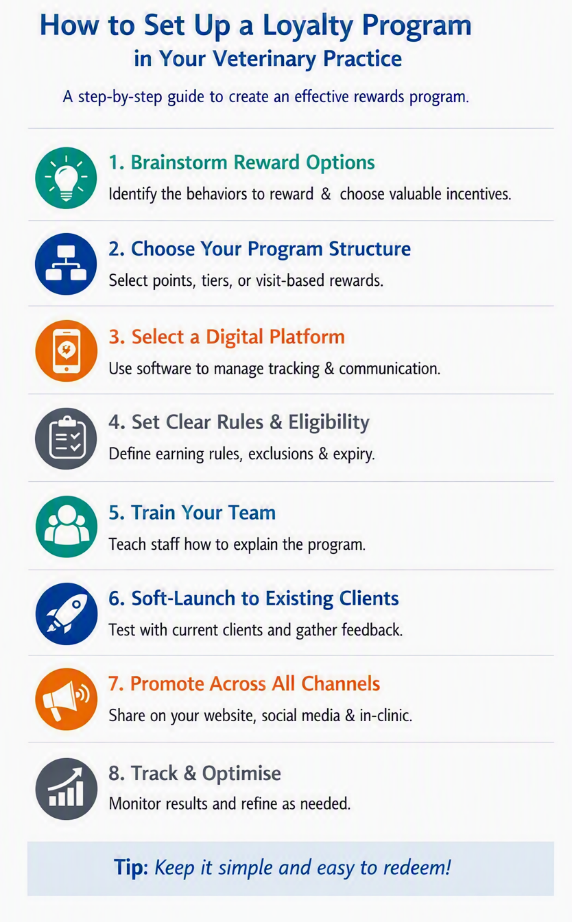
How to Set Up a Loyalty Program in Your Veterinary Practice
Setting up a veterinary loyalty rewards program doesn’t need to be complicated. The key is to design a structure that aligns with your clinic’s goals, is easy for clients to understand and simple for your team to manage. Below is a clear, actionable workflow to help you build and launch a program that works.
1. Brainstorm your reward options
Start by identifying the behaviours you want to encourage, such as preventive care compliance, repeat visits or online pharmacy use. From there, choose reward types that feel meaningful to clients without devaluing your core services. Aim for a mix of simple perks and aspirational rewards.
2. Choose your program structure
Decide whether your practice will use points, tiers, prepaid credits or visit‑based rewards. Consider your workflow, client demographics and the level of admin your team can realistically support. Many clinics combine two models to create a balanced program.
Choose a system that integrates with your practice management software or offers easy digital tracking. Platforms that automate point accrual, reminders and client communication reduce admin time and improve accuracy. Make sure clients can view their rewards online or via an app.
4. Set clear rules and eligibility
Define how clients earn rewards, what they can redeem and any exclusions that apply. Include expiry rules to keep the program manageable. Clear, simple terms will help avoid confusion and make sure the program remains financially sustainable.
5. Train your team
Staff should feel confident explaining your veterinarian rewards program, promoting benefits and answering questions. Provide scripts, FAQs and examples so messaging stays consistent. When your team champions the program, you can expect to see client uptake increase.
6. Soft‑launch with existing clients
Introduce the program to your most engaged clients first. This allows you to test the workflow, get feedback and make adjustments before you promote it more widely. Early adopters also help build momentum.
Share the program on your website, social media, email newsletters, in‑clinic signage and any other marketing channels. Use simple visuals and clear language to highlight the key benefits. Consistent promotion will help make sure that clients understand the value and know how to participate.
8. Track results and refine
Monitor redemption patterns, client engagement and financial impact. Use this data to adjust reward tiers, simplify rules or introduce new incentives. Regular optimisation will keep the program relevant and effective over time.
A successful vet rewards program relies on more than good ideas – it needs the right technology to keep everything running smoothly. The best systems automate routine tasks, track client activity and make communication easy. This will free up your team to focus on care rather than admin.
- Automation and reminders: Automation makes sure that points, credits or rewards are applied accurately after each visit or purchase. Built‑in reminders help prompt clients about expiring rewards, upcoming services or preventive care milestones, which will keep engagement high without manual follow‑up.
- Communication tools: Integrated messaging via email, SMS or app notifications lets clinics share updates, reward balances and special offers easily. Clear, timely communication helps build trust and keeps clients connected to your practice.
- Tracking and reporting: Strong reporting features let you monitor participation rates, redemption patterns and financial impact. These insights will help you refine reward tiers, identify high‑value clients and measure the program’s return on investment.
- Integration with practice management systems: Most practices benefit from using loyalty tools that integrate with their practice management software. Integration will often allow client details, invoices and visit data to flow automatically into the loyalty platform, which reduces duplication and improves accuracy. It also supports smoother communication and more reliable tracking across the entire client journey.
- Scalability and support: Choose software that can grow with your clinic. As your client base expands, scalable systems help maintain performance and consistency. Reliable support and training resources will help make sure your team can manage updates confidently.
Consider Ascend for your practice management
5 Common Mistakes to Avoid When Creating Loyalty Programs
Focusing on simplicity, clarity and consistency will help your loyalty program deliver good value without creating extra work for your team. Here are the five most common mistakes clinics should avoid.
1. Making the program too complex
Complicated earning rules, multiple exceptions or confusing tiers can quickly discourage your clients from participating. A simple structure is easier for clients to understand and easier for staff to explain, which helps keep engagement high.
2. Lack of clear communication
If clients don’t know how to earn rewards, what’s eligible or when points expire, they won’t participate. Clear, consistent communication prevents misunderstandings and builds trust in the program.
3. Insufficient staff training
Even a well‑designed program can fail if staff aren’t confident explaining it. Without training, messaging becomes inconsistent, and clients may receive conflicting information. A trained team is important for smooth adoption.
4. Over‑generous or unsustainable rewards
Rewards that are too valuable or too easy to earn can quickly erode your margins and affect your practice performance. Benefits should feel meaningful to clients while still being financially sustainable for the clinic – including not discounting.
5. Poor tracking and manual processes
Manual tracking increases errors and slows down workflow. Without reliable digital tools, clients may lose confidence in the accuracy of their rewards. Automated tracking will keep the program fair, consistent and efficient.
A loyalty program only works when clients know it exists, understand how it benefits them and receive regular reminders to stay involved. Promotion should be simple, consistent and woven into the everyday touchpoints your clinic already uses.
SMS and email
Short SMS messages and clear email updates are ideal for announcing the program, sharing reward balances and reminding clients about upcoming expiries. These channels reach clients quickly and work well for both promotional and educational messages.
Platforms like Facebook and Instagram can help you highlight the value of your loyalty program through posts, stories and client success examples. Social media is also a useful place to explain earning rules or spotlight seasonal reward offers.
Reception and in‑clinic signage
Front‑desk signage, posters and handouts can give your clients a visual prompt while they wait. Simple, friendly messaging will reinforce the program and encourage clients to ask questions during check‑in or checkout.
Wellness plans
If your clinic offers wellness plans, they are a natural place to promote loyalty benefits. Including reminders or small incentives within plan communications helps clients see how the program supports long‑term preventive care.
Post‑visit reminders
Follow‑up messages after appointments are an effective moment to reinforce your veterinarian rewards program. You can remind clients how many points they earned, highlight upcoming rewards or encourage them to book their next preventive care visit.
Using practice management software
Practice management solutions with built‑in communication tools make promotion easier. Covetrus Ascend, for example, lets clinics send SMS and email messages directly from the platform, which makes it a convenient channel for sharing loyalty updates, reminders and promotional messages. These communication features help support consistent, automated outreach that keeps clients engaged.
Book a demo today
##
Elevate Your Client Loyalty with Covetrus Ascend
A strong loyalty program can deepen relationships with your clients, support preventive care for your patients and create steadier revenue. However, its success depends on keeping things simple, communicating clearly and reviewing performance over time.
With the right mix of meaningful rewards and consistent messaging across SMS, email, social media and in‑clinic touchpoints, your program becomes easier for clients to understand and straightforward for your team to manage.
Covetrus Ascend can support your workflow by streamlining communication through built‑in SMS and email tools and help you promote updates, reminders and offers without adding extra admin. Ascend also supports wellness plans, which improve compliance by making preventative care predictable and affordable and help create steadier revenue.
To find out more, watch Covetrus Ascend’s latest recorded demo, or book an in-person demo today.
FAQs
Can veterinary loyalty programs increase client retention?
When rewards are simple, meaningful and easy to redeem, clients are more likely to return for ongoing care. Loyalty programs can help reinforce preventive care habits, reduce price sensitivity and strengthen long‑term relationships, which can naturally improve retention.
What’s the easiest type of loyalty program for a clinic to start with?
Points‑based and visit‑based programs can be the simplest because they’re easy for clients to understand and straightforward for staff to explain. They also work well with digital tracking tools, which reduces admin and helps make sure rewards are applied accurately.
How can practice management software support a loyalty program?
Practice management software helps streamline communication, which is essential for keeping clients engaged. Leading veterinary software like Ascend includes built‑in SMS and email tools that make it easy to send reminders, updates and promotional messages about your loyalty program.